

In this article 7 sections
If your Schengen visa is refused, the standard refusal form should state the reasons and explain how and when to appeal. Read the remedy instructions as soon as you receive it. The procedure belongs to the state that made the final decision. If one Schengen state decided the application while representing another, the deciding state's appeal rules apply. The European Commission's visa FAQ explains this distinction.
This guide covers short-stay Schengen visas. National long-stay visas and special family-member rules can follow different procedures. The deadlines below come from official national guidance, but use the remedy instructions on your own refusal notice for your case.
Key takeaways
- A refusal can be appealed under national rules; a new application is also possible after addressing the refusal reasons.
- Filing periods in the examples below range from 14 days to 60 days. The starting event and delivery method vary.
- Some procedures review only the original file; others allow additional evidence. Check the country's rules before sending documents.
- An appeal does not itself guarantee a visa or preserve your planned travel dates.
First: decode the refusal form
Check the boxes marked on the form, the decision date, the deciding authority and the appeal instructions. Common grounds include:
- Purpose or conditions of the trip not justified: the submitted evidence did not establish the planned visit.
- Insufficient means: the required funds for the stay and departure were not established.
- Intention to leave not established: the decision maker was not satisfied that you would leave before the visa expired.
- Travel medical insurance not established: adequate, valid cover was not shown where required.
Read the exact ground rather than guessing from the outcome. The guide to common visa refusal reasons explains how to review your file.
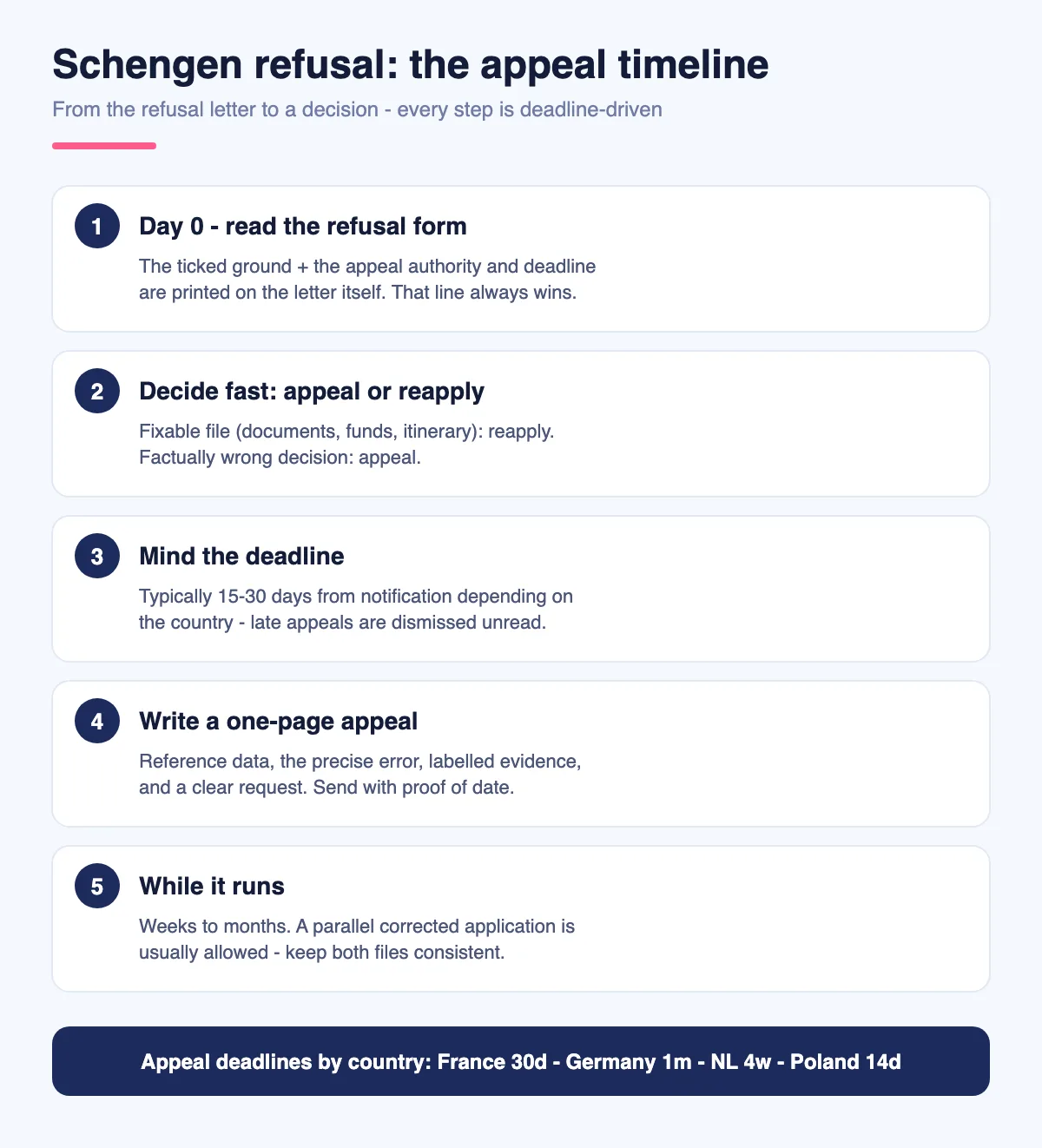
Appeal or submit a new application?
Consider a new application when information was missing or your circumstances have changed. Correct the specific weakness and explain what changed. A previous refusal does not automatically mean another refusal, but a new application brings a new fee and processing period. If a flight document is requested, check whether the consulate accepts a flight reservation for a visa or requires an issued ticket.
Consider an appeal if you can identify an error in the decision or its assessment of the evidence. Follow the permitted grounds and document rules for that country. For example, the Czech review procedure does not consider documents or information absent from the original application, whereas Norway allows an explanation of why documents could not be submitted earlier. Timing and cost differ by country, so neither route is automatically quicker or better.
Country-by-country appeal routes
These are initial routes for short-stay refusals decided by the named state, based on official guidance. A state representing another can change which row applies. Read your notice for the exact deadline, how it is counted, the language, any fee and the required delivery method.
What a good appeal letter contains
Use the language, form and channel required by the refusal notice. A clear submission normally identifies:
- Your case: name, application reference, refusal date and grounds marked.
- The disagreement: which finding you contest and why, with references to evidence where allowed.
- The requested decision: what you ask the authority to reconsider.
- Any enclosures: only documents permitted by the applicable procedure, plus proof of timely submission.
The accepted channel varies. Some authorities require a signed paper letter; a general email may not count. Keep delivery evidence and a copy of everything sent. Our Schengen visa appeal letter template is a starting point; adapt it to the instructions for your case.
While a review is pending
Processing times differ and a review may outlast the trip you planned. Check the authority's current estimates before changing travel arrangements. A new application may be possible, but ask the deciding authority how it interacts with a pending appeal in your case. Keep dates and facts consistent across submissions.
Frequently asked questions
Is there a single EU appeals office?
No. EU visa rules require an appeal route, but the procedure follows the law of the state that made the final refusal decision. A representing state can therefore be responsible even if your intended destination was another state.
Does a previous refusal automatically block a new visa?
No. A later application is assessed on its own evidence. Address the earlier refusal honestly and supply current, consistent documents.
What if the filing deadline has passed?
Ask the named authority or a qualified local adviser whether any remedy remains; the rules for late filing are national. You can usually make a new application after correcting the refusal reasons.
Do I need a lawyer to appeal?
It depends on the procedure. Some written administrative appeals can be filed personally; court proceedings can require local representation. Italy's guidance, for example, specifies a lawyer for a TAR Lazio appeal. Check your notice before filing.
Create a temporary flight reservation for visa files, airline checks, or proof of onward travel.